
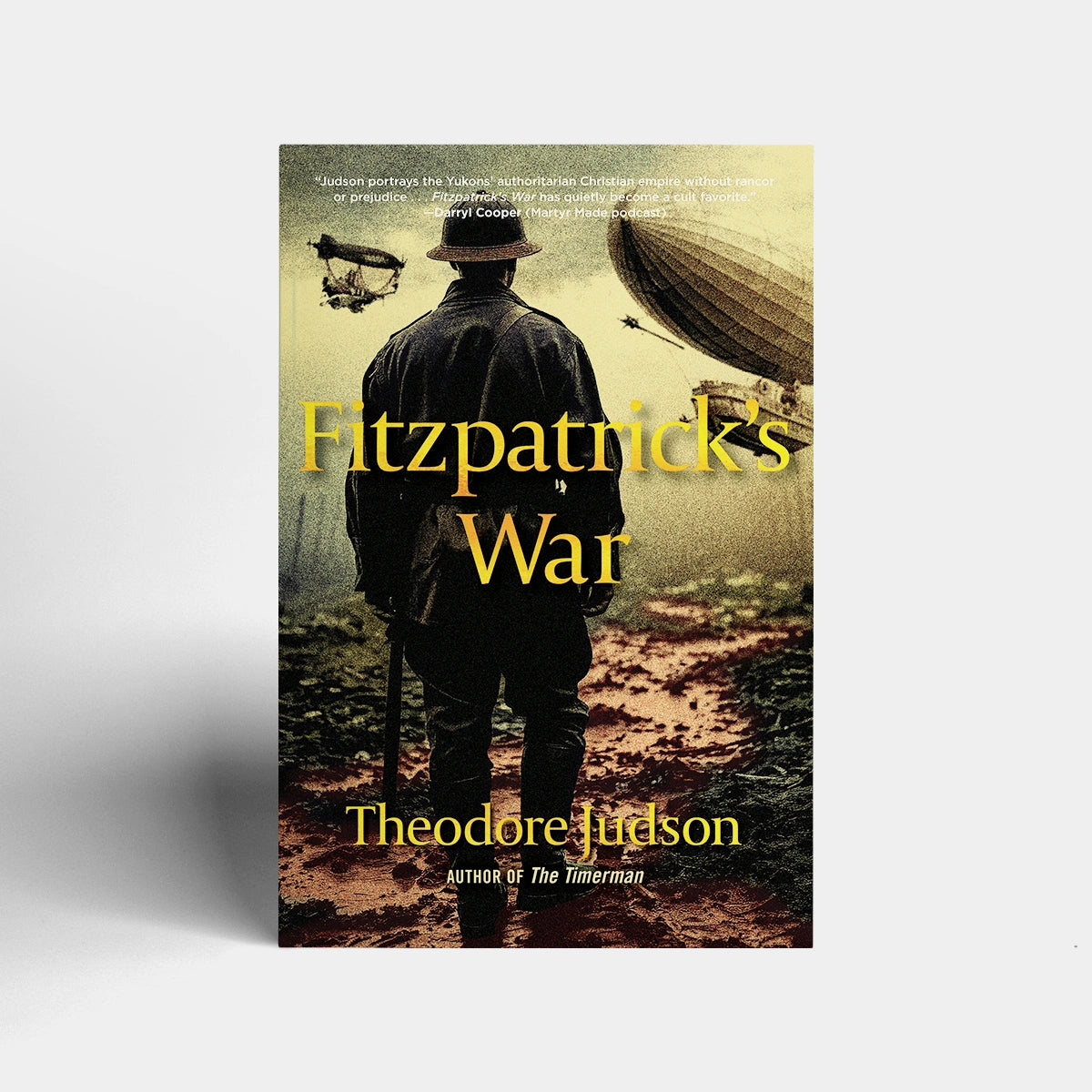
Fitzpatrick's War by Theodore Judson
Add to your order
The marvelous sci-fi classic of a postapocalyptic future without electricity or “thinking machines,” in an all-new edition! Part memoir, part historical commentary—and all a thought-provoking, ambiguous chronicle of a future packed with heroism, duplicity, and the grand actions of men in momentous times.
Our World Turned Upside Down
It is the twenty-sixth century, and the world is a very different place. Gone are the United States and Canada, replaced by the socially rigid, authoritarian Confederacy of the Yukon. Gone is the electronic age—destroyed in the apocalyptic Storm Times, which devastated the globe and decimated the world’s population in the late twenty-first century. It is now, once again, an age of steam, an age of lighter-than-air craft, an age of feudalism and knighthood, an age of conquest.
Isaac Prophet Fitzpatrick, Consul and Supreme Commander of the Yukon Confederacy, is tall, handsome, dashing and noble. He’s also the man who conquered the world in the name of the Yukons—and destroyed half of humanity in the process.
Fitzpatrick’s closest companion, Sir Robert Mayfair Bruce, elevated from the ranks and brought into Fitzpatrick’s inner circle, owed everything to his mentor and commander. Yet some call the memoir Bruce left behind the work of a lying traitor. Perhaps its author was indeed a disloyal and degenerate scoundrel.
Or maybe he was the only man brave enough to tell his world the truth.
Free U.S. shipping on orders over $75. International shipping available. 30-day return policy for undamaged items.
More in Ark Press


Real Reviews
An incredibly unique and thought inspiring book. Not only is the plot and world building unique but so too is the structure.
For structure it is written as a historical review of personal memoirs. This means it is able to pack in a fascinating number of perspectives.
As for the world, it is a speculative fiction about a traditionalist future. It contains a number of very intriguing characters and ideas that you simply won't encounter in contemporary works. Among these ideas the two biggest it grapples with are about the nature of civilizational cycles and the morality of war.
While the book provides no clear answers to the questions it poses it provides a very entertaining journey through them.